Unity (Part 1)

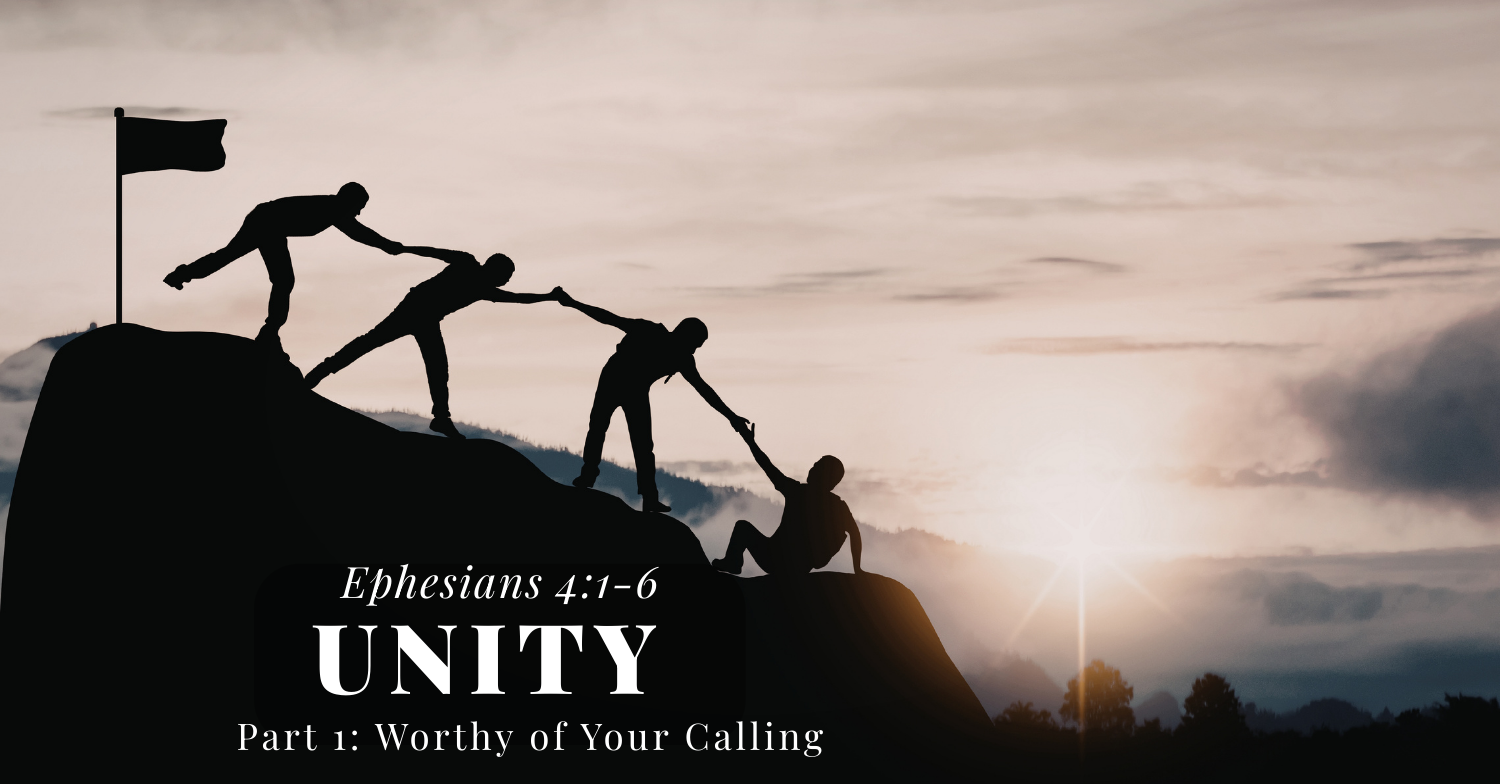
Living Worthy of the Call: Lessons from Epistle to the Ephesians 4:1–6
In a world that celebrates self-promotion, personal branding, and radical independence, the words of the Apostle Paul in Ephesians 4:1–6 feel both countercultural and deeply needed. Writing from prison, Paul urges believers to “live a life worthy of your calling.” It’s a powerful image: a man in chains speaking about freedom—the freedom to live in a way that reflects God’s purpose.
This short passage contains a profound blueprint for Christian character and community. It calls for humility in a culture of pride, patience in a world of instant reaction, and unity in an age of division. Let’s explore what it means to truly live worthy of the call.
Called by God: Identity Before Action
Paul begins with identity: “You have been called by God.”
Before discussing behavior, he reminds believers who they are. Christianity does not begin with rules—it begins with calling. A calling is not merely a task; it is an invitation into relationship and purpose. According to Paul, believers are chosen, redeemed, and brought into God’s family.
This matters because behavior flows from identity. If you see yourself as random, you’ll live randomly. If you see yourself as called, you’ll live intentionally.
To live worthy of your calling doesn’t mean earning God’s love. It means reflecting the reality of it. It’s about alignment—matching your lifestyle with your spiritual identity.
The Character of a Worthy Life
Paul then lists qualities that define this life:
-
Humility
-
Gentleness
-
Patience
-
Loving forbearance
These are not flashy virtues. They don’t trend on social media. Yet they are the backbone of real spiritual maturity.
Humility
Humility is not self-hatred or weakness. It is accurate self-understanding. It means recognizing that everything we have—abilities, opportunities, grace—comes from God. Humility dismantles comparison and competition. It creates space for others to flourish.
In community, humility says: “I don’t have to win every argument. I don’t have to be the center.”
Gentleness
Gentleness, often translated as meekness, is strength under control. It is power restrained by love. Jesus embodied this perfectly—firm in truth, yet tender with people.
Gentleness transforms conflict. It changes how we speak, how we correct, and how we disagree. It refuses to weaponize truth.
Patience
Patience is the willingness to endure discomfort without retaliation. In relationships, patience acknowledges that growth takes time. People are in process. Everyone carries wounds, weaknesses, and blind spots.
Patience says: “I won’t give up on you just because you frustrate me.”
Bearing with One Another in Love
This phrase may be the most practical of all. It assumes something honest: people will irritate us. Differences will surface. Personalities will clash.
But love chooses to “make allowance” for faults. It absorbs friction rather than escalating it. It gives grace because grace has been received.
Unity Requires Effort
Paul writes, “Make every effort to keep yourselves united in the Spirit, binding yourselves together with peace.”
Unity is not automatic. It must be protected. Interestingly, Paul does not say “create unity.” He says “keep” it. The unity already exists spiritually; believers share the same Lord and Spirit. The challenge is maintaining visible harmony.
Peace is the binding agent. It holds relationships together like mortar between bricks. Without peace, communities crumble into factions.
In today’s climate—political polarization, cultural division, online outrage—this message is urgent. Unity does not mean uniformity. It means shared allegiance that transcends differences.
The Sevenfold “One”
Paul then presents one of the most beautiful creeds in the New Testament:
-
One body
-
One Spirit
-
One hope
-
One Lord
-
One faith
-
One baptism
-
One God and Father of all
This repetition of “one” emphasizes shared foundation.
One Body
Believers are part of something larger than themselves. The church is not merely a building or event—it is a living organism. Every person matters.
One Spirit
The same Holy Spirit who empowers one believer empowers all. There is no spiritual elite class. The Spirit unites across age, ethnicity, and background.
One Hope
Christians share a future promise—a “glorious hope.” This future orientation shapes present endurance. Hope stabilizes faith during suffering.
One Lord
This refers to Jesus Christ. Allegiance to Him supersedes all other loyalties. Political identity, cultural preference, and personal opinion come second.
One Faith
There is a shared core belief—the gospel message. While secondary issues may differ, the foundational truth remains consistent.
One Baptism
Baptism symbolizes identification with Christ and entry into the community of believers. It is an outward expression of inward transformation.
One God and Father of All
Paul ends with a sweeping declaration of God’s sovereignty: He is over all, through all, and in all. This is both comforting and humbling. No corner of life is outside His presence.
Why This Matters Today
This passage confronts modern tendencies:
-
Individualism is challenged by “one body.”
-
Pride is challenged by humility.
-
Outrage culture is challenged by gentleness.
-
Division is challenged by spiritual unity.
Living worthy of the calling means resisting cultural defaults and embodying kingdom values.
It also reshapes how we view conflict. Disagreements are inevitable. Division is optional. The effort to maintain unity requires maturity and intentional love.
A Prisoner’s Perspective
It’s powerful to remember Paul writes this as “a prisoner for the Lord.” His circumstances were restrictive, yet his vision was expansive. He was chained, but the gospel was not.
Suffering did not shrink his perspective—it sharpened it. He focused not on personal comfort but on communal faithfulness.
This challenges us: are we more concerned with being right or being united? With protecting ego or preserving peace?
Practical Application
How can we live this out?
-
Practice daily humility by listening more than speaking.
-
Respond gently, especially when emotions rise.
-
Give people time to grow.
-
Refuse gossip and divisive speech.
-
Remember your shared foundation in Christ.
These choices may seem small, but they shape culture. Homes, churches, and communities become healthier when individuals commit to these virtues.
The Bigger Vision
Ephesians 4:1–6 is not merely about personal morality. It paints a vision of a unified, loving, spiritually grounded community that reflects God’s nature to the world.
When believers live worthy of their calling, they become living evidence of the gospel’s power. Unity becomes evangelistic. Love becomes persuasive.
In the end, Paul’s message is simple but demanding:
Because there is one God, live as one people.
Because you have one Lord, reflect His character.
Because you share one hope, walk together toward it.
A worthy life is not about perfection. It is about alignment—aligning conduct with calling, attitude with grace, and relationships with peace.
And in a fractured world, that kind of life shines brightly.